
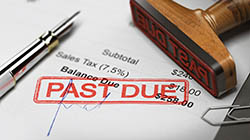
hen customers or others don't pay what they owe your business, you may be able to claim a bad debt deduction to help offset the financial loss. But it isn't automatic. Businesses must satisfy specific federal tax rules and maintain adequate records to support the deduction.
Not every unpaid debt is eligible
Whether an unpaid debt is deductible depends on several factors. First, the debt generally must be connected to your trade or business. Examples include unpaid customer invoices, certain loans to customers or suppliers and some business-related guarantees.
The debt also must be bona fide. This means there must have been a genuine expectation of repayment when the money was advanced, or credit was extended. Documentation such as invoices, contracts, promissory notes and payment terms can show the transaction was a legitimate debt rather than a gift or capital contribution.
Additionally, not every business is eligible to deduct unpaid customer receivables. The purpose of the deduction is to offset a previous tax liability. So, you must have previously included the receivable in your income.
If your business uses the cash-basis method of accounting, you generally recognize income only when payment is received. Because unpaid invoices generally haven't been included in taxable income, they're typically not deductible as bad debts.
Accrual-basis businesses generally recognize income when it's earned rather than when payment is received. As a result, they may be eligible for a bad debt deduction if an amount previously included in income later becomes partially or totally worthless. For partially worthless business debts, a charge-off for accounting purposes generally is required.
Document your collection efforts
One of the most important requirements is showing that you've made reasonable efforts to collect the debt. Simply deciding that a customer probably won't pay usually isn't enough to conclude it's worthless.
It's also critical to keep records of the actions you've taken. These may include invoices, reminder notices, collection letters, payment plans, correspondence with attorneys or collection agencies and information showing the debtor's financial difficulties, bankruptcy or insolvency. Going to court isn't necessary if you can demonstrate that obtaining a judgment would be futile.
If you haven't consistently documented your collection efforts, there's still time. Review overdue accounts and make sure your files reflect the steps you've taken to pursue payment. This can make a significant difference if the IRS questions your deduction.
Review your receivables now
If you have aging receivables or other potentially uncollectible business debts, contact us before year end. We can help evaluate your options, ensure your documentation is complete and identify the deductions you may be eligible to claim.
Sidebar: How mixed-purpose debts are treated
Some debts may involve both business and personal motives. For example, suppose you guarantee a loan for one of your best customers, who also happens to be a close friend. If the borrower defaults, whether the loss is treated as a business or nonbusiness bad debt depends on whether your dominant motivation in making the guarantee was to help your business or your friend.
The distinction is important because nonbusiness bad debts are deductible only if they're totally worthless. And they're treated as short-term capital losses, which can generally offset capital gains and up to $3,000 of ordinary income annually, with any excess carried forward.